You built something people would love if they could just see it in action. The problem isn't the product — it's the first half-second of the video. Scroll past, and none of the rest matters. That first beat is exactly what a reaction hook video is built to win.
What is a reaction hook video?
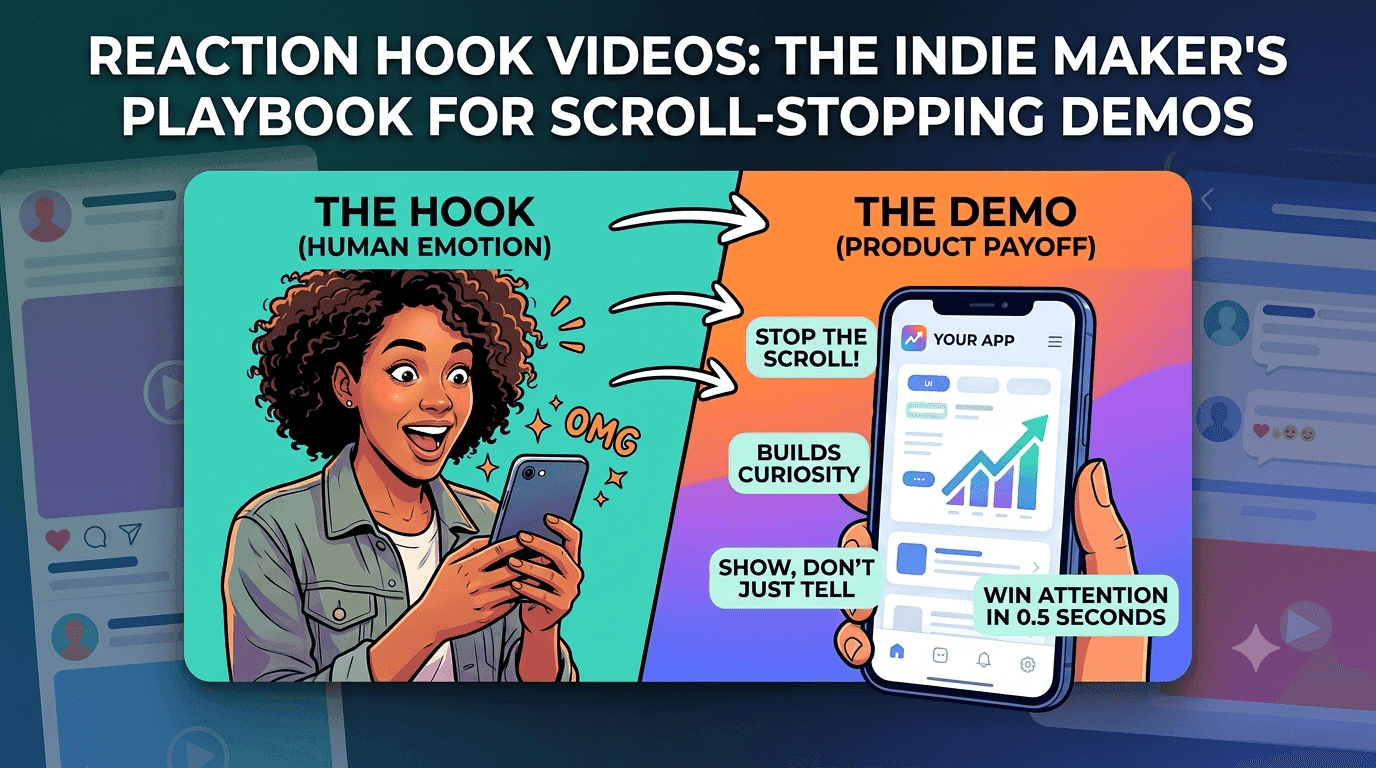
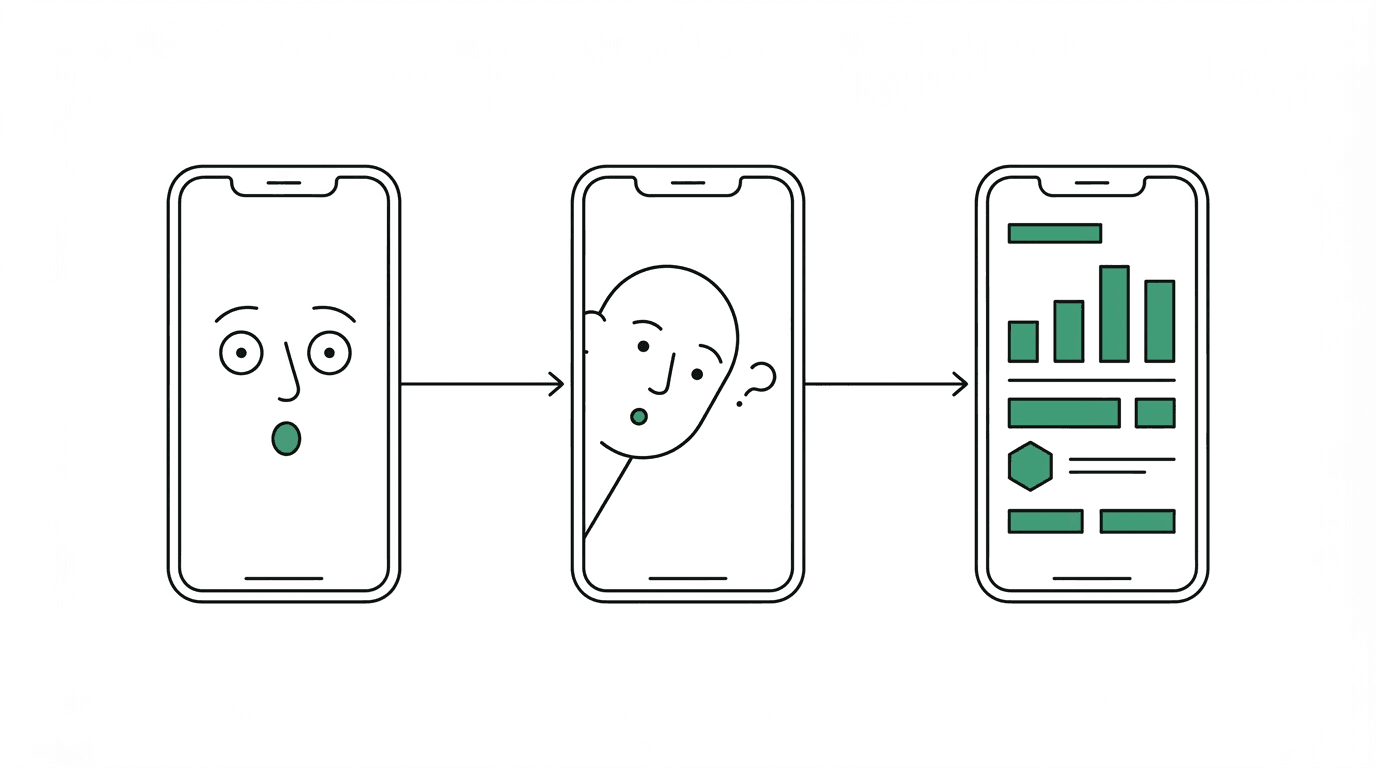
A reaction hook video pairs two things the feed rewards: a person reacting and a product paying it off. A persona delivers a punchy, human hook straight to camera — surprise, curiosity, a hot take — and then the clip cuts to your product doing the thing that earns the reaction. The hook buys attention; the demo spends it well.
Why reaction hooks out-convert a plain demo
A straight demo starts at zero — no reason to care yet — and asks a stranger to invest ten seconds on faith. A reaction hook front-loads the emotion, so the demo lands on a viewer who's already leaning in.
| What the viewer sees | Plain demo | Reaction hook |
|---|---|---|
| First frame | A UI they don't recognize | A human expression |
| Reason to keep watching | "Maybe useful?" | "Wait, what is that?" |
| Where the product appears | Immediately, cold | After the hook earns it |
| Feels like | An ad | A recommendation |
That last row is the whole game. Reaction clips read as someone telling you about a thing, not a brand talking at you — which is why they travel further for a lot less spend.
The anatomy of a hook that lands
1. The stop (0.0–0.5s)
A face and a first line that create an open loop. No logo, no intro, no "hey guys." Start mid-thought so scrolling feels like interrupting something.
2. The tension (0.5–2s)
Name the problem the viewer already feels, or tease the payoff before you show it. The reaction sells the stakes so the demo doesn't have to.
3. The payoff (2s+)
Cut to the product doing the one thing that justifies the reaction. One clear moment beats five features. Let the demo be the proof, not the pitch.
Ship a week of hooks in an afternoon
The reason makers don't post consistently isn't ideas — it's the production tax: filming, editing, exporting, re-cutting per platform. Strip that out and cadence takes care of itself.
- Write five hooks, not one. Same demo, five different opening lines. You're testing the hook, not the product.
- Let a persona deliver them. No camera, no you-on-video, no reshoots when a line changes.
- Splice once, post everywhere. One demo, many hooks, sized for each feed.
That loop is exactly what Postverse automates — you bring the product clip, pick a persona and a moment, and it returns finished reaction videos ready to schedule.
Turn your demo into reaction videos
Bring one product clip. Get scroll-stopping reaction hooks, sized for TikTok, Reels and Shorts, and scheduled — no camera, no editing.